
Shipping isn’t just about moving products. It shapes customer expectations, influences purchase decisions, and directly affects your bottom line. As your business grows, what starts as manageable can quickly become chaotic.
Manual rate comparisons, single-carrier setups, and spreadsheet-based decisions lead to missed deliveries, rising costs, and frustrated customers. You lose efficiency and end up creating friction at checkout.
Shipping management software solves these problems. It helps you:
- Automate tasks like rate calculations, carrier selection, and order routing
- Eliminate costly errors from incorrect addresses or shipping methods
- Offer shipping options such as same-day delivery, in-store pickup, or international shipping
- Cut shipping costs by optimizing packaging based on dimensional weight and product fit
Before we get into the signs that it might be time to upgrade your current process, let’s take a closer look at what shipping management software really is.
What Is Shipping Management Software?
Shipping management software connects your ecommerce store with multiple carriers and automates the end-to-end shipping and fulfillment process. It helps merchants calculate real-time rates, generate shipping labels, validate addresses, optimize packaging, route orders from multiple locations, and offer flexible delivery options, all from a single centralized platform.
With the right shipping management software, you can:
- Show real-time carrier rates at checkout
- Apply your business logic to customize shipping options based on product, destination, cart value, or customer type
- Offer flexible delivery options like same-day, LTL freight, or local pickup
- Optimize packaging based on dimensional weight
- Manage domestic and international shipping
- Automate carrier selection, delivery options, and order routing
- Track shipping performance, costs, and customer delivery experience
5 Signs You Need Shipping Management Software
#1 You’re Losing Sales Due to High or Unexpected Shipping Rates
If customers encounter high or unexpected shipping costs at checkout, there’s a good chance they’ll abandon their purchase. Flat-rate or outdated pricing might seem simple, but it can drive customers away or reduce your margins without you noticing.
This is often a sign that your current shipping setup isn’t aligned with real-time carrier rates or evolving customer expectations.
#2 Managing Multiple Carriers Feels Overwhelming
Manually comparing carrier rates, switching between multiple dashboards, and managing service levels or surcharges slows down your operations and increases the risk of mistakes.
As your order volume increases, this fragmented approach becomes harder to manage and makes it difficult to scale your fulfillment efficiently.
#3 Shipping Errors Are Increasing Your Costs
Up to 20% of ecommerce packages aren’t delivered on the first attempt, costing businesses billions each year. Errors like incorrect addresses, wrong shipping selections, or missing tracking details lead to reshipments, support tickets, and lost revenue.
These issues often come from manual workflows or disconnected systems that struggle to keep up as volume grows.
#4 Your Customers Expect Faster and More Flexible Shipping Options
Customer expectations around delivery have changed dramatically. Thanks to Amazon and instant delivery apps like Instacart, 80% of online shoppers now expect same-day delivery and are ready to pay more for it.
They also want to see accurate delivery dates before placing an order. If your checkout only offers standard shipping, you may be losing customers to competitors who provide faster, more flexible, and more transparent options.
#5 You’re Struggling with Dimensional Shipping Challenges
Most carriers charge based on dimensional weight, which means your shipping costs depend on the size of the box, not just the weight of the item. If you’re not packing efficiently or using the right-sized boxes, you’re essentially paying to ship air.
Inefficient packaging increases costs and reduces profitability, especially as shipment volume rises. Those extra inches on every box can add up to significant lost profit.
Key Features to Look For in Shipping Management Software
| Feature | What It Does | Why It Matters |
| Shipping Rules | Create rules tailored to business needs without writing code | Tailors shipping to your business goals without manual intervention |
| Rate Shopping | Automatically compare live shipping rates from multiple carriers at checkout | Shows the best shipping methods based on speed and cost |
| Multi-Carrier Shipping | Add, remove, or prioritize carriers by performance or cost | Keeps your shipping strategy agile and cost-effective |
| LTL Freight Shipping | Show real-time freight pricing for large or heavy items | Enables transparent pricing for oversized or B2B shipments |
| Dimensional Packing | Calculate the most efficient box size based on product dimensions in each shipment | Prevents overpaying for dimensional weight and reduces waste |
| Estimated Delivery Dates | Show accurate delivery dates based on customer location, holidays and carrier lead time. | Builds trust and reduces cart abandonment |
| Multi-Origin Fulfillment | Ships orders from the closest warehouse or dropship location | Speeds up delivery and reduces shipping costs |
| In-Store Pickup | Let customers choose to pick up orders from a nearby store pick-up location. | Reduces last-mile shipping costs and supports omnichannel fulfillment |
| International Shipping | Calculate and display total landed costs, including duties and taxes, at checkout | Simplifies cross-border fulfillment and reduces delays |
| Address-Type Validation | Verifies address type during checkout, distinguishing between residential and commercial locations | Prevents unexpected fees and protects margins |
| Shipping Analytics | Track shipping spend, carrier reliability, and delivery speed | Helps identify savings and improve performance |
Boost Sales by Optimizing Shipping & Checkout
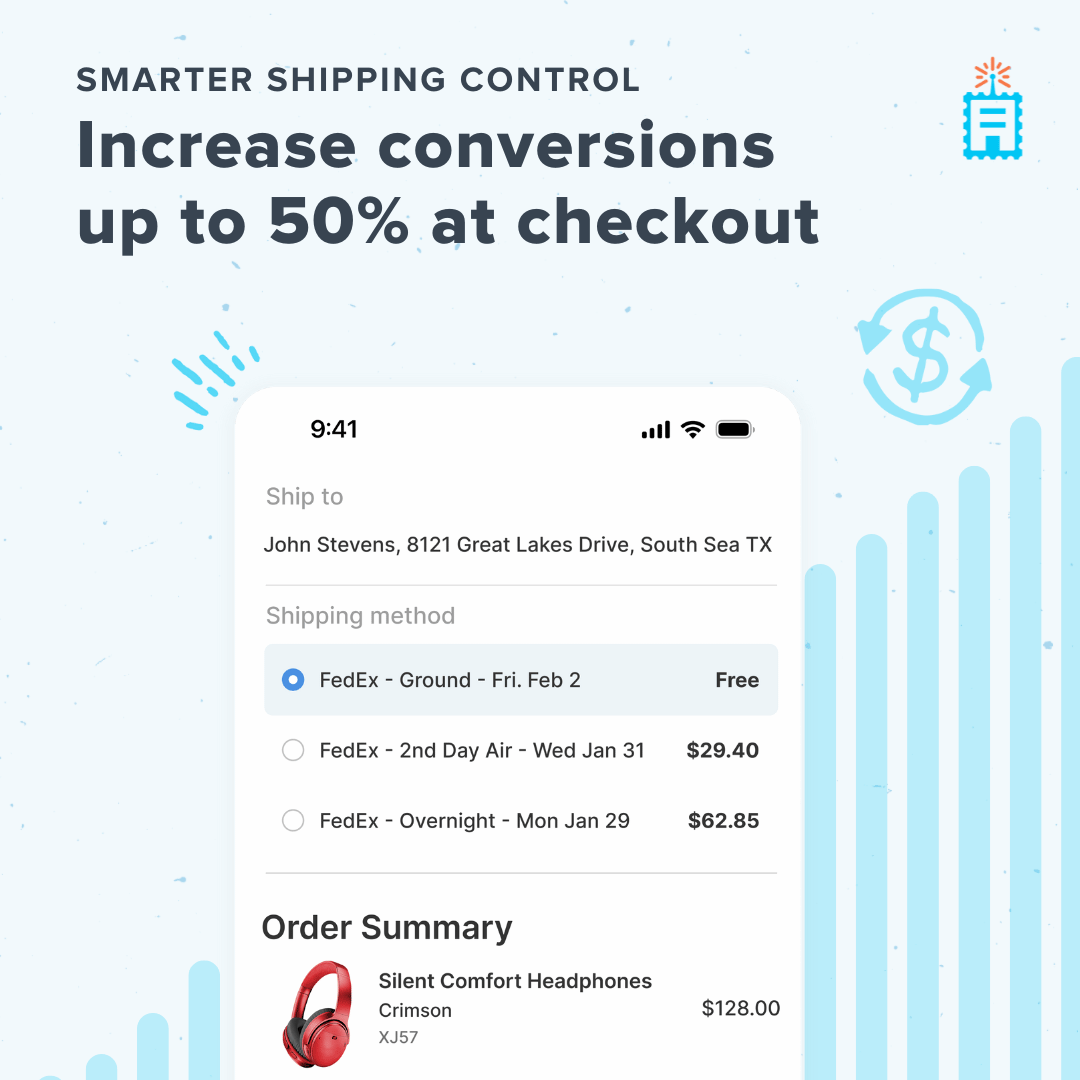
Shipping is more than a logistics task. It directly affects conversion, customer satisfaction, and profitability. If you’re still experiencing incorrect delivery dates, high cart abandonment rates, or shipping-related support issues, it’s time for a change.
ShipperHQ has spent 17+ years building the most powerful shipping and checkout experience platform. It puts you in control of delivery options, rates, and rules without the need for custom code or expensive workarounds.
Trusted by over 6,000 brands across 150+ countries, ShipperHQ helps you:
- Show accurate delivery dates at checkout
- Offer competitive, transparent shipping rates
- Customize shipping rules with no developer help
- Lower returns, reduce support tickets, and protect your margins
- Optimize packaging to reduce dimensional shipping charges
Stop guessing. Start optimizing your shipping and checkout today.
Take a 15-day free trial with ShipperHQ today and experience hassle-free, cost-effective shipping and order fulfillment.
FAQs on Shipping Management Software
1. How can merchants easily update and manage shipping rules?
Shipping management software like ShipperHQ includes a rule builder that lets merchants set up and adjust shipping logic without any coding.
You can create rules based on destination, product type, cart value, or customer group and update them in minutes as your business evolves.
For example, you can:
- Offer free shipping on orders over $75
- Restrict express delivery for oversized or fragile items
- Apply weekend delivery only in select metro areas
- Add a surcharge for rural or out-of-zone shipments
This flexibility helps you align shipping with your business strategy without needing developer support.
2. How can I optimize my ecommerce shipping strategy to reduce costs?
Shipping solutions help reduce costs through automation, real‑time rates, and smarter decision‑making across carriers, packaging, and fulfillment locations. They allow you to:
- Use dimensional packing logic to avoid overpaying for box size
- Compare carrier rates in real time to choose the most cost‑effective option
- Route orders from the closest warehouse to reduce transit miles
- Set rules to limit express shipping to high‑value carts only
These strategies help lower your shipping spend, protect margins, and scale more efficiently.
3. How can ecommerce businesses offer customized shipping rates at checkout?
To offer customized shipping rates, you need a system that connects with carriers and applies rules based on various attributes. Shipping software like ShipperHQ does this by tailoring rates to each order.
Shipping rates can be adjusted based on customer location, cart size, product type, or delivery preferences. Here are a few useful scenarios:
- Offer discounted rates for VIP customers or loyalty members
- Display real‑time carrier rates alongside free shipping thresholds
- Hide certain methods for fragile or hazardous items
- Apply custom rates for wholesale or B2B orders
Customized rates improve transparency at checkout, help you stay competitive, and ensure customers only see relevant options.