Shipping rate updates are a regular part of annual planning for eCommerce teams. What makes 2026 worth closer attention is not just the headline General Rate Increases, but how carriers are refining the way shipments are assessed.
UPS, FedEx, and USPS have all adjusted base rates by around 6%. But that doesn’t tell the full story. At the same time, UPS and FedEx have placed greater emphasis on cubic volume, actual weight, and delivery location when applying surcharges. For many eCommerce shippers, this increases the importance of accurate packaging data and shipping logic to reduce exposure to carrier rate increases and protect margins.
Below is a summary of the 2026 last-mile carrier updates and what they mean for your bottom line.
How Shipping Rates Have Changed Across Carriers in 2026
Across the major carriers, three themes stand out:
- Base shipping rates have increased ~6% through 2026 General Rate Increases
- More packages now get flagged for oversize and additional handling fees and are more directly tied to package volume than actual weight
- Residential, delivery area, and remote surcharges have risen and affect a broad share of B2C shipments
Individually, these changes are familiar. Together, they introduce more cost variability if shipments are not rated accurately upfront. Surcharges now account for roughly 33% of the average package cost, making them a significant portion of total shipping spend.
For example, when a shipment crosses an oversize threshold, added charges can reach up to $331 per package for the Large Package Surcharge alone, depending on zone and carrier, before base transportation costs are included.
UPS 2026 Shipping Updates
UPS announced a 5.9% average General Rate Increase for U.S. domestic shipping, which took effect December 22, 2025. In addition to base rate changes, UPS has updated how it applies oversize and handling surcharges.
Effective January 26, 2026: Large Package and Additional Handling Updates
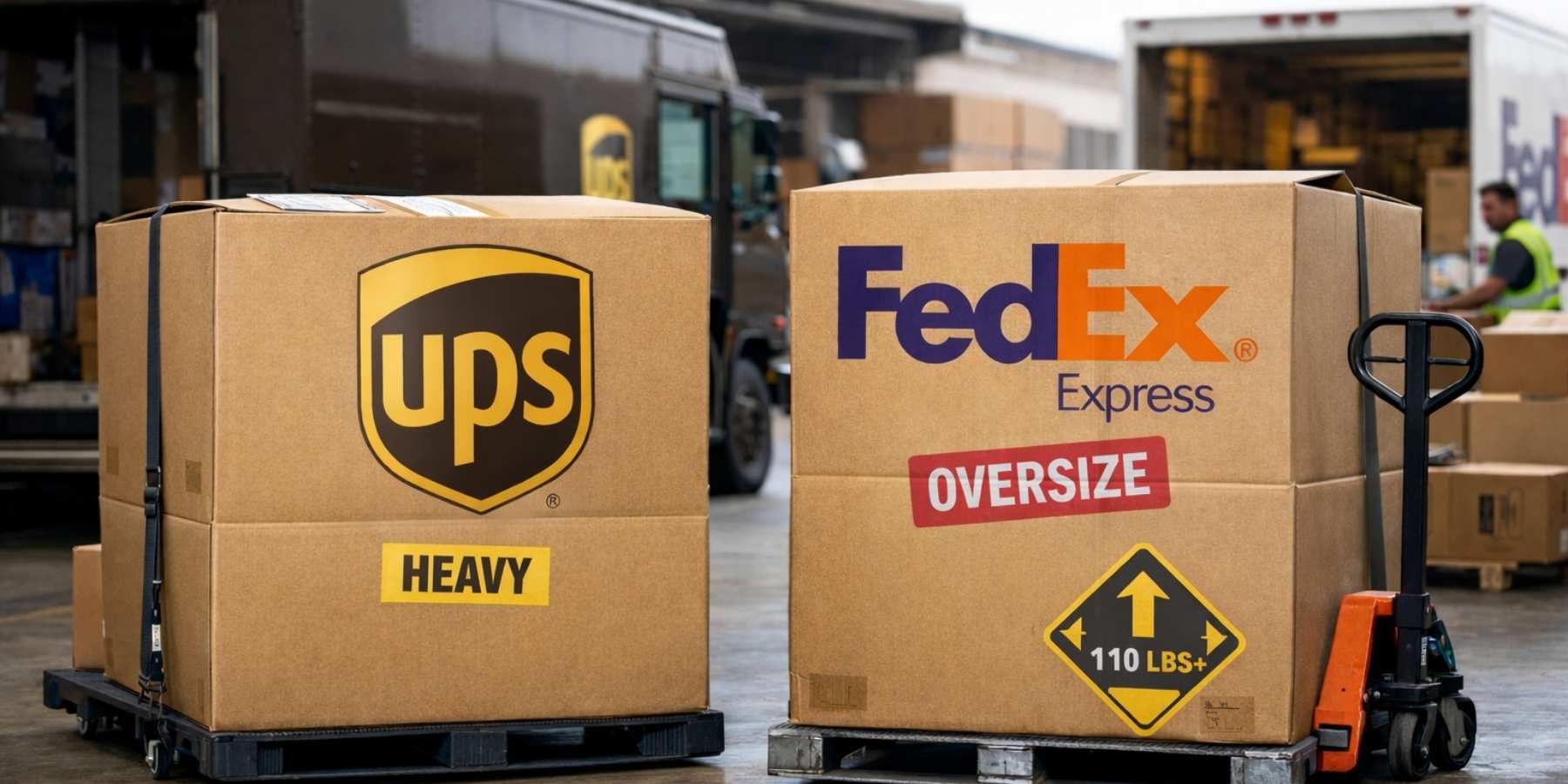
Domestic Large Package Surcharge (LPS) applies when a package:
- Exceeds 17,280 cubic inches in cubic size
- Exceeds 110 lb in actual weight
Existing dimensional factors, including length and length plus girth, remain in place.
Domestic Additional Handling Charge (AHC) applies when a package:
- Exceeds 10,368 cubic inches in cubic size
UPS has also updated measurement practices. Fractional inches will round up to the next whole inch, which can affect dimensional weight calculations. Minimum charges have increased as well, which may affect how discounts apply to lower-weight shipments.
Residential and Remote Surcharges
Oversize thresholds get attention, but residential and remote fees are often the more repeatable cost driver because they apply to a broad share of B2C orders.
Key updates include:
- Residential Surcharge (Ground) increased by roughly 6–7%, placing per-package residential fees in the mid-$6 range
- Remote Area Surcharge (U.S. 48) increased by roughly 7–8%, with per-package costs now in the mid-teens
For shippers delivering to remote or extended ZIP codes, that translates to around $15 to $17 per package, applied consistently across eligible orders.
UPS also notes that surcharge applicability can shift as ZIP code and zone alignment lists may update over time, which means exposure can change even if shipping volume stays flat. For full definitions and published guidance, refer to UPS’s shipping costs and rates page.
FedEx 2026 Shipping Updates
FedEx announced an average 5.9% rate increase for 2026 across Express, Ground, and Home Delivery services, which took effect January 5, 2026.
Effective January 12, 2026: New Volume and Weight Triggers
FedEx has added new volume and weight thresholds to its existing oversize rules.
Additional Handling Surcharge – Dimension applies when:
- A package exceeds 10,368 cubic inches in cubic volume
Oversize Charge applies when a package:
- Exceeds 17,280 cubic inches in cubic volume
- Exceeds 110 lb in actual weight
These criteria apply alongside FedEx’s existing length and girth rules. The oversize charges vary by zone, but for many shipments, they can fall in the mid-$200s to low-$300s per package range, depending on lane and service.
Residential, Delivery Area, and Remote Fees Have Also Increased
FedEx’s 2026 surcharge updates show continued increases across residential and delivery area fees, particularly for Home Delivery shipments.
- Residential Delivery Surcharges increased by roughly 8%, pushing per-package fees into the mid-$6 range. At the same time, FedEx Date Certain Home Delivery®, FedEx Evening Home Delivery®, and FedEx Appointment Home Delivery® surcharges are now applied per package rather than per shipment as of Jan. 12. This change causes costs to scale more quickly on multi-box residential orders.
- Delivery Area Surcharges increased by around 6% for both residential and commercial deliveries, affecting a broader share of last-mile shipments.
- Remote Delivery Area Surcharges increased by 8%, with per-package fees now approaching $17, further amplifying costs for orders shipping to harder-to-reach locations.
USPS 2026 Shipping Updates
USPS rate changes for Shipping Services took effect January 18, 2026. The average rate increase is as follows:
- Around 7 to 8% for USPS Ground Advantage
- Around 6 to 7% for Priority Mail
- Around 5% for Priority Mail Express
USPS pricing is structured differently from UPS and FedEx and does not include fuel or residential surcharges. However, USPS continues to apply nonstandard fees tied to package length and cubic volume, making accurate dimension data important for larger parcels.
Why Accurate Shipping Rates Matter in 2026
As shipping rates rise and pricing leans more heavily on dimensional weight and added fees, shipping accuracy matters more than ever. It’s easier to see where costs come from, but harder to predict them when relying on estimates alone. For shippers, that doesn’t just mean higher rates. It means more variability at a time when margins are already being squeezed by tariffs, returns, labor costs, and fulfillment complexity.
Instead of planning around a single headline increase, ecommerce brands are now managing a growing mix of surcharges tied to how items are packed, how many boxes ship in an order, and where those orders are delivered. This shows up across several key business metrics.
Margin Predictability
When shipping rates at checkout do not reflect how shipments are actually packed and assessed, cost differences surface after invoicing. On oversized shipments, those gaps can be significant, especially as more surcharges are applied per package.
Checkout Conversions
Shipping costs play a direct role in conversion. Rates that are overstated can discourage customers at checkout, while understated rates leave shippers absorbing unexpected oversize or handling fees once orders ship.
Budgeting and Planning
Most teams can plan around a 5–6% headline increase. The bigger challenge is forecasting the mix of surcharges that vary by carton selection, packing behavior, destination type, and package count.
The 2026 carrier updates reinforce a clear reality for shippers. Shipping costs are becoming more precise, more conditional, and more dependent on how orders are actually packed and delivered.
If you need help calculating the impact of these 2026 rate changes, or want to validate whether your checkout rates reflect real carrier assessments, reach out to the ShipperHQ team.
Our shipping experts will help you review your shipping setup and get started in 2026 with accurate, predictable shipping rates.